The time Facebook blocked me from posting and lessons learned

So, I’ve returned from an 8 day posting hiatus imposed upon me by the goliath that is Facebook. What follows are my thoughts, not necessarily cohesive, on these last eight days.

About 8 days ago, I shared a previously recorded live video (via the URL) to two forums I maintain on Facebook. Ironically (IMHO), the video was about How to Download A Copy of Your Facebook Profile. (Somebody tell me that isn’t ironic.) Seconds after sharing this video, I went to respond to someone in one of the forums on an unrelated post and was told something to the effect of “Sorry, you can’t do that.” Further investigation revealed I had been restricted from posting to or joining FB groups due to “using the system in a way that was suspicious, even if you didn’t intend to.”

Was it the FB live video I shared?

Was it the number of posts I’d made during the day?

I am still not sure.

I also received a notification that the post(s) I’d just made were potential spam (again, the irony given the nature of the video). I was offered an opportunity to dispute this and did. The system agreed: they were not spam. However, this did not lift the restriction.

I was presented with the option to appeal the restriction, which I did, asking for human assistance, as well. No such assistance was forthcoming (I know, I am but one of 1 BILLION users). However, the part that galled me (equal to the system agreeing I didn’t spam but still restricting me) was that when I appealed the decision (and apparently lost), the restriction was extended.

I experimented with this and there seemed to be a direct correlation to the “appeal”, followed by an extension of several hours for the ban. This was, as I may have mentioned, quite galling. Offer me the opportunity to appeal a bad decision, then penalize me for doing so? Bad form, Facebook. Bad form.

Overall, there are a couple of lessons I learned from this:

  1. Be extremely careful with your posts. There is no appeal to the Gods of Facebook. I tried. I was penalized for it. Research into this issue showed the appeals are entirely based on algorithms with no human intervention. I think Facebook has something of an obligation given their power to make this process less…clinical.
  2. Appealing to the same Gods results in extensions of the ban. This is perhaps the most galling part of this 8 days. That they penalize you for appealing is just…aggravating.
  3. No humans apparently work for Facebook. See above.
  4. We are the product, not the consumer. This experience showed me we are data, not people, to this platform. I don’t believe myself to be special but I have given Facebook a lot of my time and attention. I am going to work on lessening this.
  5. My business is more reliant on this platform than I am comfortable with. I interact with people on Facebook; it’s what I do and a large part of how I generate new business and maintain my existing business. I have to work on that.
  6. It was kind of nice not being able to post as I was then not compelled to.

More to follow, I just wanted and needed to get this out there. For fear of the Gods of Facebook, I shall not be sharing this to their platform.

10thHuman: Complex systems evolve and change

Complex systems evolve and change. People are complex systems.
– Rob Thompson

I am big on frameworks and systems. These help people build and scale their businesses and personal lives.

However, people are complex systems and our frameworks need to build in the flexibility and space to accommodate this and themselves evolve.

Talking and doing consume the same resources

Original image: pixabay

Talking and doing consume the same resources.

I’m listening to “Ego is the Enemy” today on Audible and this nugget jumped out at me (amongst others).

What does this mean?

In the context of the book, the author isn’t saying we should go about our day in silence and just work.

What he’s aiming and elaborates on is that we often fool ourselves into substituting talk for action. If we talk about a thing, our brains are somewhat fooled into thinking we did that thing in part, because the two consume similar resources.

This speaks to me quite profoundly as it mirrors or underscores a question I often ask myself, “Am I doing the busy things or the important things?

10thHuman: Stress as a mismatch

source unknown

This meme speaks to me and, I suspect, a good number of people.

I would add to this stress is also a mismatch between what you want to be and the demands or expectations of others.

Be you.

Be the best you you can be, in the capacity that brings you peace.

That’s my goal. It manifests for me as being the best dad and human and advocate I can be.

10thHuman: Are you doing the busy things or the important things?

Original image: pixabay

As you go through your day do you find yourself doing the busy work or the important tasks?

Have you as a business owner taken the time to map out which is which?

Do you have a battle rhythm? A battle rhythm is a mapped out baseline plan for your day, a list of minimum, mandatory tasks or processes aimed at sustaining and building your business. It is also a career decision.

Whiplash: The future will run on an entirely new operating system.

image from pixabay
image from pixabay

I’m reading Whiplash right now and just read this in a passage.

The future will run on an entirely new operating system.

This book is about how to think about and leverage the changes coming our way.

Why is this important? 

Because if you are not disruptive, you will be disrupted.

What are the questions you should be asking in your industry?

What new technology will impact you? 

What skills should you be learning or enhancing?

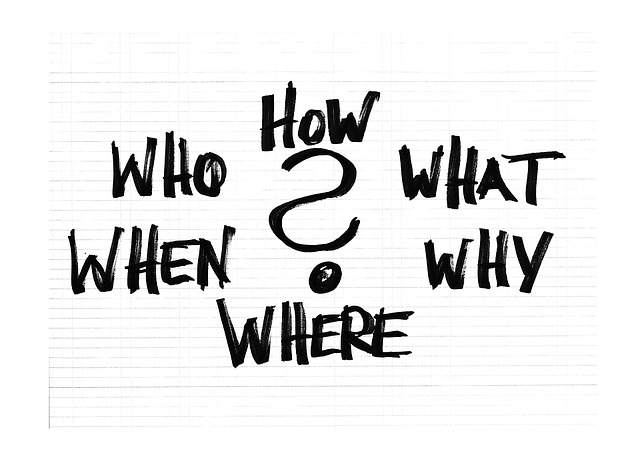
10thHuman: On the value of asking a question

image from pixabay
image from pixabay

I’m reading A More Beautiful Question right now by Warren Berger and came across this insight.

One good question can give rise to several layers of answer, can inspire decades-long searches for solutions, can generate whole new fields of inquiry, and can prompt changes in entrenched thinking. – Stuart Firestein

I suspect Firestein is coming at this from a deep philosphical perspective but this is applicable to our existing businesses, too. For example, from a business perspective, I continually ask myself, How can I add value?

What is your question?


Idea: Learning to code

image from pixabay
image from pixabay

Business Insider has a quick read up about the benefits of even an introductory course to coding. I concur.

I think taking a coding course opens up the idea of the synthesis of ideas. It helps you see connections between seemingly or potentially disparate ideas.

If you’re looking for a new career path and into the idea of coding, I would seriously consider learning Unity. I think there will be a huge need for the skill with the coming of Augmented Reality.