10th Human: A sustainable battle rhythm is a career decision

20160731 OODAI had an hour drive in the car this morning and chose Tim Ferris’ podcast with Seth Godin to pass the time. There were a solid dozen ‘nuggets’ I jotted down for future follow up and thought but I want to share one with you today.

When asked about his habit of blogging daily (a decision I’ve recently begun here), Mr. Godin referred to this as a ‘career decision’. This was an intentional decision on his part, one of 5 or 6 he has made in his career, he stated.

That really landed with me. I use the language of a “battle rhythm” in my business (twenty years of military service left me with a lingering affinity for the lingo). A concept I’ve been struggling to articulate concisely for a little while is the why of having a sustainable battle rhythm is so important. It seems apparent that a business owner wants to have this because consistency and reliability build brand trust. However, Seth’s phrasing of a daily habit like blogging as a career decision really stuck with me.

In sum, having a sustainable battle rhythm is also a career decision.

P.S. I should probably define what I mean by battle rhythm. My definition here is: those minimum, mandatory tasks you do on a continual basis to maintain your business.

10th Human: Why you should network

tree-200795_640It’s 99.99% likely you are reading this on Facebook, LinkedIn, Twitter or the Internet. We are a networked planet, nearly globally. With such a diverse possibly of contacts, you are quite literally losing business if you are not engaged in some form of networking.

In researching this question, I came across this article from Dayna Steele, from Relate by Zendesk. She absolutely nails it when she writes, “The larger your network, the more opportunities, ideas, and answers come your way.”

Be you. Be authentic. Add value.

Your business very likely depends on it.

10th Human: On “To-Do” lists

image from pixabay
image from pixabay

There are hundreds (if not more) of philosophies and strategies regarding to do lists. A Google search yields thousands upon thousands of results, from the 5 best To Do List Managers to the 5 Best To Do List Tips to the 5 Ways to Make Your To List More Effective to the Anti To Do List.

What’s one to do? (Sorry, had to!)

I am a proponent of the basics. My to do list is nothing fancy. I use a small notebook where I make a note of the daily to dos (it’s sorted by date). Priority tasks get an (!) next to them. I am also a proponent of ToDoist.com. It’s straightforward project and task based team task management platform. I use this for larger projects and task delegation.

Effective task management is critical to the long term success of a business.

What system do you use?

Fortune favors the follow up. – Erik Stark

image from pixabay
image from pixabay

I was listening to the BiggerPockets podcast this morning and heard this advice from Erik Stark, a successful Florida real estate marketer. He has a number of nuggets of wisdom in the podcast and I would very much encourage you to listen (it’s #93).

I wanted to take a moment and dig into this quote today. What does Mr. Stark mean by this? In his business, he has found success in the follow up. He has developed a system that works for him, through which he is able to deliver sustained and systematic follow up to his clients.

Are you following up? Do you have a system to do so?

Fortune favors the follow up. – Erik Stark

What comes after the URL?

image from pixabay
image from pixabay

I recently had a breakfast meeting recently with a very smart man who made a statement that has been circling around in my mind for some days now.

He suggested the way we access information may soon shift.

Consider: 52% of web sharing is now occurring on Facebook. Over half of information being shared right now is being done inside Facebook. A number of prominent bloggers have also shifted to FB versus maintaining their own website.

What do YOU think the future of information in the cloud looks like?

23 best quotes on leadership…

  • Do not overly exalt yourself.
    – Marcus Aurelius


  • Being a good leader is not a byproduct of a pleasant personality.
    – Retired USAF MSgt John Mitchell


  • I must follow the people. Am I not their leader?
    – Benjamin Disraeli


  • Never doubt that a small group of thoughtful, concerned citizens can change world. Indeed it is the only thing that ever has.
    – Margaret Mead


  •  To command is to serve, nothing more and nothing less.
    – Andre Malraux


  • It’s hard to lead a cavalry charge if you think you look funny on a horse.
    – Adlai Stevenson


  • Management is doing things right; leadership is doing the right things.
    – Peter F. Drucker


  • I cannot trust a man to control others who cannot control himself.
    Robert E. Lee


  • I start with the premise that the function of leadership is to produce more leaders, not more followers.
    – Ralph Nader


  • I have three precious things which I hold fast and prize. The first is gentleness; the second is frugality; the third is humility, which keeps me from putting myself before others. Be gentle and you can be bold; be frugal and you can be liberal; avoid putting yourself before others and you can become a leader among men.
    – Lao Tzu


  • The day the soldiers stop bringing you their problems is the day you stopped leading them. They have either lost confidence that you can help them or concluded that you do not care. Either case is a failure of leadership.
    – Retired General Colin Powell


  • Do not expect bad people to exempt you from their destructive ways. 
    – Marcus Aurelius


  • You do not lead by hitting people over the head — that’s assault, not leadership.
    – Former President Dwight D. Eisenhower


  • Refrain from imposing your feelings onto reality.
    – Marcus Aurelius


  • Too many kings can ruin an army. 
    – Homer


  • The growth and development of people is the highest calling of leadership.
    – Harvey S. Firestone


  • Our power lies in our small daily choices, one after another, to create eternal ripples of a life well lived.
    – Mollie Marti


  • A good leader is a person who takes a little more than his share of the blame and a little less than his share of the credit.
    – John Maxwell


  • No great manager or leader ever fell from heaven, its learned not inherited.
    – Tom Northup


  • As we look ahead into the next century, leaders will be those who empower others.
    – Bill Gates


  • You manage things; you lead people.
    – Real Admiral Grace Murray Hopper


  • What you do has far greater impact than what you say.  
    – Stephen Covey


  • Great leaders are almost always great simplifiers, who can cut through argument, debate, and doubt to offer a solution everybody can understand.
    – Colin Powell


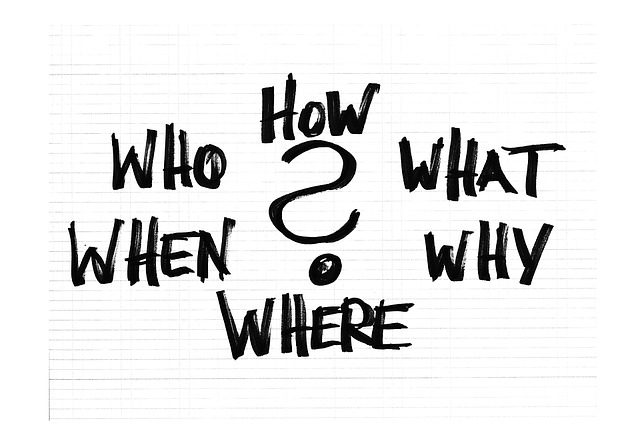
Rule #1: define your why

I believe the first rule of a successful venture is to define your “why?”

Why are you doing what you are doing?

What drives you to get up every morning, gear up and head out the door?

My professional why is helping people succeed in their businesses. I am fascinated by what makes businesses and people tick and the exploration of ways to improve strategy, culture and processes.

Why is defining your why so important? 

If you don’t know you’re why, you’re what and how are going to be extremely difficult to define, much less execute.

You must know your why so that you can effectively determine your what and how.

Why am I doing this?

What problem am I solving?

How am I going to solve that problem?

The eye cannot see what the mind does not know…

I heard the above words from a physician whom diagnosed inside thirty

image from pixabay
image from pixabay

seconds what we had been struggling to identify for nearly fifteen months with one of our children.

In this short timeframe, she observed several indicators that led her to an immediate diagnosis of a condition we did not know existed.

She was able to do this because she – her mind – had a working knowledge of the same.

This is one reason I never want to stop learning. There is always something more to learn, a new perspective to consider.

Toward that end, I am currently working my way through several of the books on this list.

Inc: 10 Powerful Books That Will Change How You See the World

Why “10th Human?”

network-1433045_640
image from pixabay

One of my favorite questions is, “Why?”

Why are we doing it this way? is an incredibly powerful question.

I started 10th Human Consulting, LLC, with the concept of the tenth man rule.

The tenth man rule is the concept of having someone on your team who challenges the traditional way of doing things. Someone who, as a standard practice, asks why and proposes alternatives.

This is often viewed as contrarian but it need not be viewed as negative. Instead, it can be a sound part of effective strategy building.

Let’s look at one example of how I saved one organization three weeks a year by asking why and following through on the answer.

Some time ago, I observed a routine in a department tasked with tracking the status of more than 1,200 pieces equipment and directing maintenance for any outages.

The vast majority of that equipment functioned properly day in and day out and the key thing the team needed to know was if was if a piece of equipment was faltering and needed attention. Yet each morning an employee spent approximately 30 minutes entering status updates on every piece of equipment into a computer system.

The status of most equipment didn’t change and only any status that did change needed to be flagged for action. Yet the organization was paying someone 2.5 hours a week – that’s 130 hours a year — to click a mouse more than 1,200 times to confirm statuses that had not changed.

Looking only for status reports that had changed however took approximately two minutes each morning, which saved labor hours and shortened the response time for assignment of maintenance work.

When I saw this, I asked, “Why? Why are you updating statuses that haven’t changed?”

The answer was, “It’s always been this way.”

So I asked, “Where does that data go?” then spent about 30 minutes posing the same question to leaders in higher levels in the organization, until the fellow at Level #3 asked me, “Why the heck are they doing that?”

By having a 10th Man take a fresh look at old practices, the organization freed up approximately $1,950 per year in labor costs*  and was able to channel those new-found hours into value-added activities.

If this resonates with you, please give me a call at 719-440-6626 and let’s chat.

(*Based on $15 per hour, the approximate labor rate for the organization.)